Posts in Life Coaching

When Ancient Wisdom and Ultra Running Collide

March 2nd, 2026 Posted by Life Coaching, Performance Coaching, Uncategorised 0 thoughts on “When Ancient Wisdom and Ultra Running Collide”

Torrential rain has been lashing the middle of the North Island for the last couple of days but there appears to be a reprieve as I make the early morning 20-minute walk to the starting line. The clouds are angry but they appear to be holding back from unleashing the onslaught we’ve recently experienced. The air is so thick with humidity I’m already sweating. It’s not quite 7am and steam is rising from the geothermal hot pools surrounding Te Puia in Rotorua. The central park is packed to the brim with people in bright colours; some stretching, others doing knee tucks to warm up for the day ahead, and yet others are queuing for the toilets for a nervous one before the race starts.

I’m standing at the start line of the Tarawera T50, a 52‑kilometre trail run that can take anywhere from 4 to 14 hours to complete and will take us through some of the most stunning geothermal landscapes and New Zealand bush you will ever experience. I’m feeling a little nervous as the countdown to the start gets underway and even contemplate quickly dashing to the toilets myself. I’ve completed many endurance events over the years and, all but one, managed to cross the finish line. My finisher photos are never pretty and I always look a little worse for wear but I’m always thoroughly pleased with myself. The one time I didn’t finish was during the 2021 Tauranga Half Ironman, where I cleverly managed to break my foot on the run.

However, this is my first ultramarathon event. It’s not the first time I’ve signed up for it, but it’s the first time I’ve made it to the start line. I’ve signed up for this very race twice before but had to pull out due to injury — once because of a hamstring tear and the other due to a sciatic nerve issue. Perhaps that’s what’s making me nervous; it’s been four years since I’ve competed in anything. Will I be able to go the distance?

You are in danger of living a life so comfortable and soft, that you will die without even realising your true potential. ~ David Goggins

I start to jump around a little, trying to pretend that I know what I’m doing, when my wife’s voice pops into my head. It’s a question she always asks when I’ve managed to drag myself across the finish line looking like death warmed up: Why do you keep doing this to yourself? For a long time, I couldn’t put it into words … until I discovered the meaning of eudaemony.

Eudaemony — or eudaimonia if you’re feeling fancy — is one of those ancient Greek ideas that somehow feels more relevant now than ever. The Greeks weren’t talking about quick hits of joy or the kind of happiness you get from a good flat white. They meant something deeper: flourishing, living in a way that feels aligned with your values, your purpose, and your best self. Aristotle framed it as the highest human good, and modern psychology still echoes that sentiment, describing it as authentic self‑realisation and living in accordance with your true nature.

This is where the whole “happiness versus fulfilment” thing gets interesting. Happiness, as we tend to use the word today, is often about feelings — pleasure, comfort, ease. Nothing wrong with that, of course. But the Greeks would say that’s only the surface layer. Fulfilment, on the other hand, is the slow‑burn stuff: purpose, growth, contribution, virtue. It’s the teacher who feels deeply satisfied shaping young minds, even on the days when nothing goes to plan. It’s the craftsperson who keeps showing up, not because it’s always fun, but because mastery feels meaningful.

Aristotle was pretty blunt about it: happiness as a feeling comes and goes, but eudaemony is a way of living. It’s built through choices, habits, and character — what he called aretē, or virtue, guided by practical wisdom. The Stoics later doubled down on this, arguing that flourishing comes from aligning your actions with your inner nature and values.

So, if happiness is the weather, fulfilment is the climate. One shifts daily; the other is shaped over years. And eudaemony? That’s the art of building a life where fulfilment becomes your default setting — where you’re not just feeling good, but being good, in the richest, most grounded sense.

I imagine trying to explain this to my wife at the finish line, but can only picture the concern on her face as she assumes I’ve pushed myself far beyond my limits and am in need of urgent medical attention. Instead, I turn my focus back to the colourfully dressed runners, the smiles and the excitement as we wait for the starting gun, and feel a sense of belonging. We all know suffering lies ahead and, within that suffering, we will achieve fulfilment, happiness and – whether people can articulate it or not – eudaemony.

Are you interested in tools for building a high performing team? Then check out my new book ‘Now, Lead Others’.

Now, Lead Others

If you’re interested in hearing more tips about how you can Unleash Your Potential or that of your team, please feel free to drop me a note. I’m always happy to share ideas and help where I can.


Photo by Brian Metzler on Unsplash

Photo by Tim Mossholder (Unsplash)

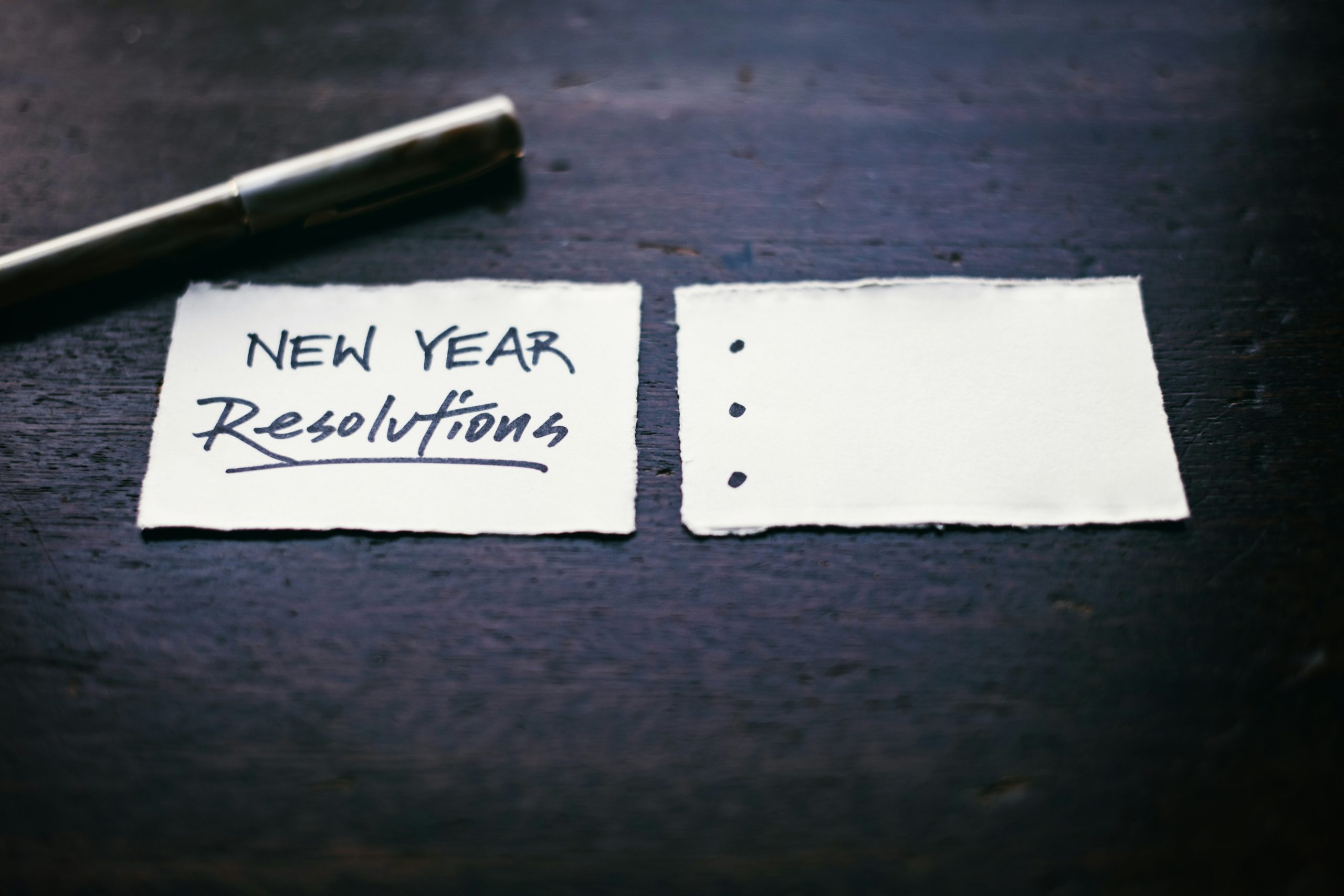
Why You’re Likely to Fail at Achieving Your New Year’s Resolutions Again

January 4th, 2026 Posted by Life Coaching, Performance Coaching 0 thoughts on “Why You’re Likely to Fail at Achieving Your New Year’s Resolutions Again”

I’m sure you’re aware of the statistics when it comes to people sticking to their New Year’s resolutions. You might even have personal statistics for how well you’ve done in the past that buck the trend. But what that trend tells us is that around 80% of New Year’s resolutions fail by February, and only about 10% of people actually accomplish their goals by the end of the year. However, one of the key reasons why people fail at achieving their New Year’s resolutions is often overlooked, and it is rarely talked about.

A few years ago, I was working with a client who came to me for leadership coaching. She was a well respected middle manager in the energy sector, and her initial goals focused on communication and being more effective in her workplace. After making good progress with these goals, she asked if we could change the focus a little. She explained that a personal goal she had was to lose weight. She told me that she had tried everything, but nothing seemed to work. She had worked with a nutritionist, a hypnotherapist, a naturopath, a spiritual healer and, although she made progress in the beginning, it wasn’t long before the weight started to pile on again.

I had a pretty good idea of how to approach helping her, but rather than tell, I always find it better to show. I explained that I was going to ask her a series of questions, and that the type of answers I was looking for were one or two word responses. I took out some Post it notes and asked her the first question: What’s most important to you in life? She gave her answer, I wrote it down on a Post it note, and then I asked her the next question: What’s most important to you in life? She looked at me as if I had two heads, and I laughed, telling her that I hoped she had more than one thing that was important to her in life. After about eight iterations, I placed her answers on a whiteboard.

Where do you think health was on her list of values? If you’re guessing it didn’t make the list, you’re right. The reason she failed to make lasting progress was because, when it came time to make a decision about where she’d spend her time or what to focus on, her values unconsciously steered her away from her health goal and back to what was important — at least according to her value system. For example, if that morning she had committed to going for a walk at lunchtime but then, in the moment, decided to try and clear her inbox instead. Or if she had committed to preparing a healthy lunch and snacks for the following day but found herself watching television instead. You can start to see why she was having trouble achieving her goal: health didn’t exist in her value system and, like a ship’s compass, her values kept pulling her back on course so she remained aligned to them.

The question “What’s most important to you in life?” is so powerful to contemplate because the answers that come to us speak to our values. A straightforward definition of a value is “those things that are important to us, that we hold personally sacred”. We all have values, whether we’re conscious of them or not, and they influence every decision we make (i.e. what we will do), and we use our values to evaluate what we have done. We all know when we’ve done something that misaligns with a value because we feel shame, regret, anger, or guilt. Basically, our values tell us what to focus on and how to spend our time.

Our goals are directly aligned to our values. So, if you’ve ever given up on a New Year’s resolution in the past and shrugged it off, it’s likely your goal wasn’t aligned to your value system and, just like my client, your day to day decisions didn’t support you in achieving that goal.

The good news is that our values, as important as they are to us, are arbitrary — they’re made up. Our values are strongly influenced by our culture, the people we choose to spend time with, our education, religion, the significant people in our lives, social media, and even the articles we read. Therefore, if there’s an area in your life that you would like to do better in — whether it’s finances, health, relationships, or career — ask yourself where this area sits in your value system. If it doesn’t exist, or if it’s down toward the bottom of the list, create one and it to move it closer to the top, wherever feels right for you. A simple way of doing this is to find a quiet space, close your eyes, and imagine what you would be doing if you were living this value. Ask yourself: What key decisions should I be making? and, just as importantly, When might those decision points come into conflict? If you repeat this exercise for a couple of minutes every morning, you will become much more conscious of what to focus on throughout the day, and your decisions will start to reflect your new value — ultimately leading to better, long lasting results.

Don’t shy away from making a New Year’s resolution; simply ensure that your goal aligns with your value system or create a value for the area in your life you wish to change. I wish you every success in making 2026 your best year yet!

Are you interested in tools for building a high performing team? Then check out my new book ‘Now, Lead Others’.

Now, Lead Others

If you’re interested in hearing more tips about how you can Unleash Your Potential or that of your team, please feel free to drop me a note. I’m always happy to share ideas and help where I can.


Photo by Tim Mossholder on Unsplash

Results Coaching

What I’m learning about myself doing the 75 Hard

June 1st, 2025 Posted by Life Coaching, Performance Coaching 0 thoughts on “What I’m learning about myself doing the 75 Hard”

“Dad, let’s do the 75 Hard,” said my 16-year-old daughter.

“Sure,” I said. “What is it?” In hindsight, I should have asked “What is it?” first!

I had vaguely heard of it before but not in much detail. After a bit of research, it turns out that the 75 Hard is a physical and mental challenge that requires solid commitment for 75 consecutive days—no breaks! And, if you miss even one item on the list on any given day, you have to start again. Challenge accepted! So, what does it consist of?

Here are the core rules of the 75 Hard Challenge:

  • Follow a strict diet: You choose your diet, but you must adhere to it without any “cheat meals” or alcohol for the entire 75 days. If you break this rule, you restart from Day 1.
  • Two 45-minute workouts per day: One of these workouts must be outdoors, regardless of the weather. No rest days are allowed.
  • Drink one gallon (approximately 3.8 litres) of water daily.
  • Read 10 pages of a non-fiction, self-improvement, or educational book each day: Audiobooks do not count.
  • Take a daily progress picture.
  • No compromises or substitutions: If you miss any of these tasks on any given day, you must restart the entire challenge from Day 1.
  • Meditate for 10 minutes (this is an additional rule I added for myself).


When I looked at the rules, I thought I’d modify them slightly. Firstly, a gallon of water isn’t feasible for me because I’d be running in and out of training and coaching sessions every five minutes; however, I have increased my water intake. Next, as much as I love taking pictures of myself, taking a daily progress photo isn’t something I’m keen to do either. Other than that, I’ve been following the rules for the last eight days. So far, so good—well, kind of.

I started the challenge on a Friday, so the first couple of days over the weekend were easy enough to fit in. As the week continued, I noticed I needed to push myself a little more just to fit everything in. I was fairly sure the two 45-minute workouts wouldn’t be an issue because I normally fit in five or six workouts a week, so it was just a matter of figuring out what I’d do and when. The diet isn’t a problem because I eat pretty clean anyway; as a rule, I don’t eat sugar or processed foods. Reading non-fiction is something I do regularly anyway, but I must admit that before the challenge, I wasn’t reading every day—so this has been a great prompt. Lastly, I introduced ‘meditate for 10 minutes’ because I’ve wanted to be consistent at it for a long time but have never managed it beyond a few days.

So, what makes the challenge so hard?

For me, it’s about managing my time. The workouts, reading, and meditating might not seem too time-consuming, but I’ve found myself rushing to meetings because I needed to fit in a workout beforehand. Or, as was the case when the adjoining picture was taken, working out late on a Friday night because I hadn’t managed to fit in my second session earlier in the day. It doesn’t take much to derail a day!

But what have I learned about myself so far?

Surprisingly, I realised that I’m not as disciplined as I liked to think I was. I realised I procrastinate a little too much for my liking and can spend far too long reading the news or mindlessly scrolling on my phone. The great thing about the challenge is that it has forced me to be much more organised and plan my day in greater detail than I’ve ever needed to before, which I’m finding very useful. I’ve also stopped procrastinating before a task simply because I need to complete the above non-negotiables within my waking window. Not only am I avoiding procrastination with these specific tasks, but also with other things I need to get done—could this challenge be the antidote to procrastination? 🤔

What surprised me the most?

I seem to be changing how I prefer to relax. Historically, much to the annoyance of my wife, I’ve been a “relaxer-relaxer,” but now I’m more proactive in getting small tasks done. It’s like I’m aware that I have less time in my day, which has made me more focused. It actually feels pretty good.

I’m also mindful of my sleep and how it affects my energy and motivation. For example, over the weekend, I was part of a voluntary clean-up crew at the stadium after the Hurricanes’ match, raising money for Tawa Swimming Club. It started at about 9:30 pm, and we didn’t finish until just before midnight. I really noticed my energy levels plummet over the following two days, and my sleep that night was quite disrupted. Needless to say, I’ve had to double down on ensuring I followed through on my commitments.

The results so far

I’ve dropped over a percentage of body fat and increased my muscle mass percentage (not that you’d be able to notice!). I’m smashing through more books (I often read more than the mandatory 10 pages), and I’m generally calmer and more relaxed throughout my day.

Do I recommend giving it a go?

Absolutely! I’ve no doubt I’ll continue to discover little things about myself whilst benefiting from being healthier in mind and body. What will you discover about yourself?


Are you interested in tools for building a high performing team? Then check out my new book ‘Now, Lead Others’.

Now, Lead Others

If you’re interested in hearing more tips about how you can Unleash Your Potential or that of your team, please feel free to drop me a note. I’m always happy to share ideas and help where I can.

Reults Coaching

Is it not just better to eat the darn marshmallow?

March 28th, 2025 Posted by Life Coaching, Performance Coaching 0 thoughts on “Is it not just better to eat the darn marshmallow?”

Many years ago, when my daughters were much younger, I was explaining the importance of delayed gratification (can you imagine how intolerable it would be having a father as a coach? Very… apparently). To demonstrate my point, I described the famous experiment conducted by Walter Mischel and his colleagues at Stanford University in the 1960s. To this, my daughter responded with overwhelming confidence, “I’d be really good at that!”

If you’re unfamiliar with the experiment, the marshmallow test aimed to study delayed gratification and self-control in children. In the experiment, a child was presented with a marshmallow and given a choice: they could eat the treat immediately, or they could wait for a short period (typically 15 minutes) and receive an additional treat as a reward. The results revealed that children who resisted the immediate temptation and waited for the reward tended to have better outcomes later in life, such as higher academic achievement, better social skills, and improved emotional regulation. This simple yet impactful experiment has been influential in psychology, sparking discussions on self-control, decision-making, and the nature of human behaviour.

Taken aback by such confidence, I asked, “Why do you say that?”

“I don’t like marshmallows,” she said smugly. Can you imagine how intolerable it would be to have such a smug child? I’d better not answer that!

Why this recollection came to mind after all these years is because I was debating in my mind whether it is always better to delay gratification for a future (but sometimes uncertain) reward, or to live in the moment—have your reward now and damn the consequences! After all, mindfulness practitioners often tell us that it is healthier to live in the moment, do they not?

For example, although I’ve got a few years to go, my wife and I are saving for retirement. I don’t know about you, but I’d like to have a few options when I get there. To achieve that, we have to make some sacrifices now. BUT, how many people do you know who have been whisked away from us in their prime? If they could pass on their wisdom, what would they tell us to do?

The other thing I’m doing is upping my exercise. I’m not training for anything in particular, but because I’m so funny, when asked, I often quip, “I’m training for middle age.” Although said in jest, I’m being very serious. Why? Because as we get older, especially over the age of 50, things start to go south very quickly. Therefore, the importance of staying in shape (increasing muscle mass and reducing fat) becomes crucial from a quality-of-life point of view. If, for example, you want to be able to tramp the same distance carrying a 10 kg weighted backpack in ten years that you do now, you need to be carrying a 20 kg weighted backpack because of the amount of strength (muscle mass) we lose over that time. If you’re in your 30s, you don’t need to worry so much about this now; however, make sure you pack this sage advice from Uncle Cillín away somewhere in your mental backpack because you’ll be thankful in 20 years.

So, what’s the answer? For me, the answer lies in our value system and our identity as a person. You see, for my daughter, not eating the marshmallow isn’t a sacrifice at all because she doesn’t like marshmallows; however, it also wouldn’t be a sacrifice for a person who simply didn’t eat sugar because of their value system. “Hi, Cillín, would you like a cigarette?” “No thank you, kind stranger, I don’t smoke.” Smoking isn’t part of my identity and therefore it’s not a sacrifice for me—no willpower is needed. So here’s my question for you: What beliefs do you have around your impulse control? Are you the type of person who gives in too quickly or, even if you used to, have you developed strategies to postpone gratification for a larger reward later down the track? Are you even tempted by life’s marshmallows because of your value system? Are you a saver rather than a spendthrift (identity statements)?

Are you interested in tools for building a high performing team? Then check out my new book ‘Now, Lead Others’.

Now, Lead Others

If you’re interested in hearing more tips about how you can Unleash Your Potential or that of your team, please feel free to drop me a note. I’m always happy to share ideas and help where I can.

Giving feedback

Three steps to getting these vital conversations right every time!

October 8th, 2024 Posted by Leadership Tools, Life Coaching, Performance Coaching 0 thoughts on “Three steps to getting these vital conversations right every time!”

As leaders we often forget how important a feedback conversation is to one of our team. To you and me, giving feedback might seem like a simple straightforward conversation but that couldn’t be further from reality. Even the smallest, seemingly insignificant, feedback can be taken the wrong way.

(more…)

Results Coaching

Seven steps to start building trust with your team

August 31st, 2024 Posted by Leadership Tools, Life Coaching, Performance Coaching 0 thoughts on “Seven steps to start building trust with your team”

Without trust, the chances of building a high performing team are virtually nil. Unfortunately it takes time and effort to build the type of trust in which a team can thrive but there are ways to help speed this along. One approach that I share in my leadership workshops is a simple, yet powerful, expectations exploration exercise. So how does it work?

(more…)

Results Coaching

If only I had more time to get things done…

July 3rd, 2024 Posted by Leadership Tools, Life Coaching, Performance Coaching 0 thoughts on “If only I had more time to get things done…”

“If only I had more time to get things done …” If this is a lament you say to yourself more often than not then it’s clear you need a new strategy. I’m not judging because I’ve caught myself saying this more than I care to admit but it got to a point at the beginning of this year when I had enough!

I had all these big goals for the summer that included: (more…)

Why goal setting doesn’t work

January 31st, 2023 Posted by Life Coaching, Performance Coaching 0 thoughts on “Why goal setting doesn’t work”

Are you part of the 55% of people who set new year’s resolutions but fails to keep them 12 months down the line, or do you follow through and make the changes that enable you achieve your goals? Why is it that the vast majority fail to achieve their goals; 11% even give up in less than a month. Here are a few tips for why goal setting doesn’t work and a few to help you smash your goals for the year! (more…)

My Personal Experiment

November 9th, 2022 Posted by Life Coaching 0 thoughts on “My Personal Experiment”

If you’ve ever worked with me you know that I don’t promote ideas that I don’t put into practice myself. Over the last 4 months I’ve been focusing on something that’s not entirely new but is always on my mind, as I’m sure it’s on your mind too! How do I know this? Because it’s something that is constantly in the media and is never far from people’s lips. What’s this ‘not entirely’ new experiment I’ve been implementing?

(more…)

What’s the one thing that is more powerful than training?

April 30th, 2022 Posted by Life Coaching, Performance Coaching 0 thoughts on “What’s the one thing that is more powerful than training?”

I was only ever pretty average at school. The best grade I got was a ‘B’ and I only got it once. Needless to say the world of academia wasn’t for me. I was more into sports and training at the time so it was off to fitness and leisure management for me. What was really interesting is that I soon propelled myself to the top of the class. (more…)

Archives

Categories

Results Coaching exists for one purpose, to help you and your team achieve your goals and get the results you strive for. Unleash your potential and live your life to the max. About Services Resources About Cillín Let's Chat Client Endorsement Videos Services Overview Team Facilitation Corporate Training Leadership Coaching Books Blog Media Engagements Privacy Policy Website and contents © Setanta Ltd trading as Results Coaching. results@resultscoaching.co.nz Subscribe to the Unleash Your Potential - DEEP DIVE 0800 120 034 newsletter Cillin Hearns